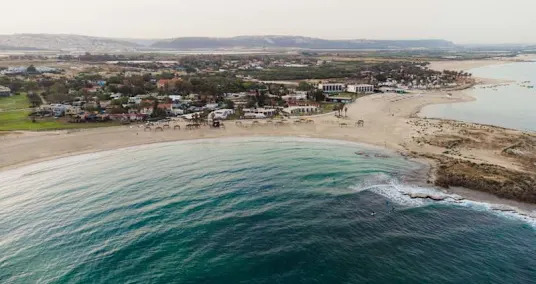
The discovery was made in an ancient shipwreck in the Dor Lagoon near the Carmel Coast, where archaeologists recovered nine pieces of unprocessed iron known as “blooms.”
Researchers from the University of Haifa said Wednesday that an underwater excavation off Israel’s northern Mediterranean coast uncovered what they described as the earliest known cargo of raw iron transported by ship, dating back around 2,600 years, Xinhua reported.
The discovery was made in an ancient shipwreck in the Dor Lagoon near the Carmel Coast, where archaeologists recovered nine pieces of unprocessed iron known as “blooms.” According to the university, the find provides direct evidence of how iron was transported in its earliest commercial stages.
The material was preserved in its original form, having solidified directly in a smelting furnace without undergoing forging or further refinement. Researchers said this distinguishes the cargo from later iron artifacts that typically show signs of shaping or tool-making.
Unlike copper and bronze, which could be melted into liquid form in ancient production processes, iron was heated with charcoal to produce a solid, porous mass. That mass was generally hammered to remove impurities and create denser material suitable for tools and implements.
The recovered blooms showed no indication of that secondary processing stage, suggesting they were transported immediately after production.

Earliest iron shipment discovered in ancient Mediterranean wreck
To determine the age and condition of the cargo, researchers conducted microscopic and chemical analyses.
Radiocarbon dating was also carried out on charred wood embedded in one of the pieces, helping confirm the timeline of the shipment. The findings were published in the journal Heritage Science.
Researchers said the cargo indicates that iron was being moved in raw form from production sites to other locations for further processing, pointing to a level of specialization in ancient manufacturing and trade networks in the Mediterranean.
The University of Haifa said the discovery provides new insight into early iron production and distribution practices in the region.
LATEST POSTS
- 1
 April full moon 2026 dazzles as 'Pink Moon' lights up skies worldwide (photos)
 - 2Everyone knows F1 is for the girls. I wandered into the Las Vegas desert to find out why.
- 3Catch the moon dancing with bright star Regulus tonight
- 4White House responds to Sabrina Carpenter after pop star slams 'evil' ICE video using her song
- 5Turning into a Distributed Writer: My Composing Process



- Figure out How to Pick a SUV with Senior-Accommodating Tech Elements
- Most loved Amusement Park Firecrackers Show: Which One Lights Up Your Evening?
- 10 Setting up camp Shelters That Offer Both Excellence and Isolation
- South African army arrive in crime hotspots to help tackle gangs
- Hostile to Maturing Skincare Items to Rejuvenate Your Skin
- 7 Straightforward Moves toward Move Information from Your Old Cell phone to Your New One: A Thorough Aide
- Intriguing Social Unesco World Legacy Locales All over The Planet
- 'Unreal' solar eclipse: Artemis 2 crew just saw one of the rarest sights in spaceflight history
- Warming winters lead to more nitrate pollution in the drinking water near farms